
Compare second-chance bank accounts
Choose the account whose fee you can realistically avoid, whose deposit and ATM access fit your routine, and whose overdraft rules limit new penalties. A checking account restores banking access; it does not build credit merely by being open.
Compare recovery-friendly checking accounts by monthly fee, waiver, opening deposit, overdraft policy, access, and important limitations.
Second-chance bank account comparison
Compare the current monthly fee, waiver rules, opening requirements, overdraft treatment, and operating limitations.
| Account | Monthly fee | How to avoid it | Opening deposit | Overdraft treatment | Important limitation | Bank source |
|---|---|---|---|---|---|---|
| Chase Secure Banking | $4.95 or $0 | $250+ qualifying electronic deposits or an owner age 17–24 | No minimum deposit stated | No overdraft fees; transactions may be declined or returned | Bank On certified; no paper checks or outgoing wires | Verify Chase Secure Banking terms |
| Wells Fargo Clear Access Banking | $5 or $0 | $250+ qualifying electronic deposits, owner age 13–24, or qualifying military deposit | Not stated on the current product page; verify during application | No overdraft fees; certain activity can still create a negative balance | Bank On certified; checkless account | Verify Wells Fargo Clear Access Banking terms |
Both accounts are Bank On certified. Account approval is not guaranteed. “No overdraft fee” can still mean a payment is declined or returned, and certain activity can produce a negative balance.
What this table cannot decide for you
Branch and ATM access, cash-deposit habits, employer payment methods, old bank records, and the need for paper checks can matter more than a small fee difference.
Check the complete account routine
Read the full fee schedule, not only the product landing page. The account-fit scorecard turns those needs into a shortlist.
Before another application
Understand the old record first
- Read the adverse-action notice from the last denial.
- Request any screening report it names.
- Dispute identity or balance errors with evidence.
- Resolve valid unpaid bank balances when feasible.
- Apply once the underlying record is understood.
Put the account inside the full banking-access sequence
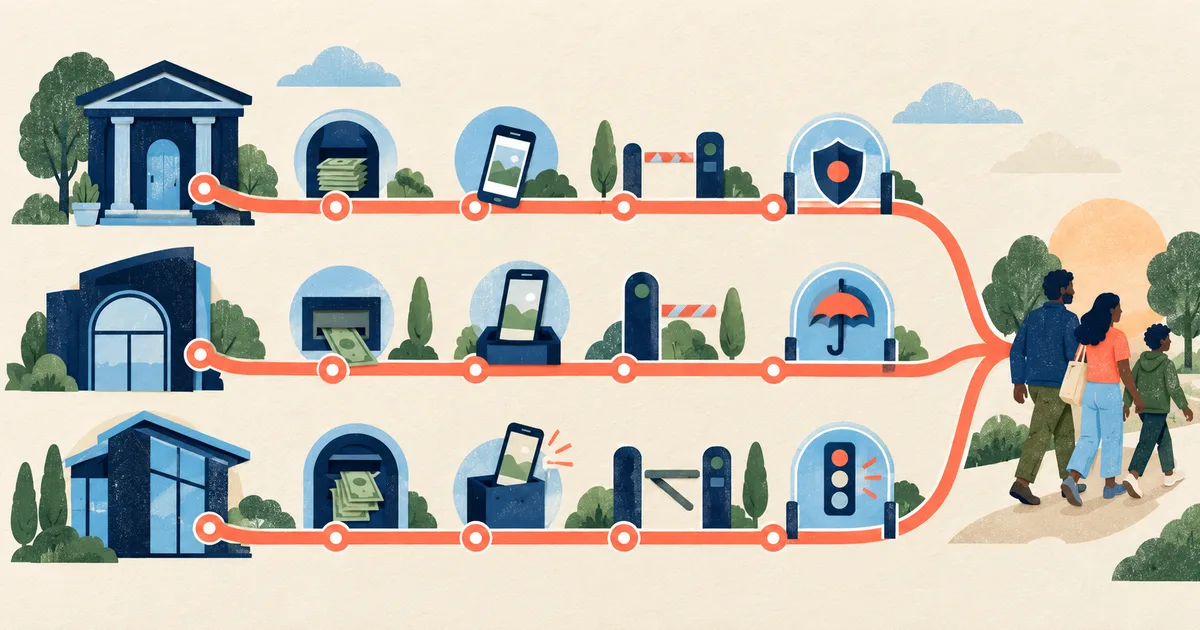
A product comparison is most useful after the denial notice, screening report, unpaid balance, and transaction needs are understood. The banking-access recovery guides put those records in order before another application.
Explore the banking-access recovery guides →